
Letterboxd
Letterboxd LimitedSocial
3.41.92K Reviews
- Version
- 3.6.7
- Installs
- 10.00M
- Age Rating
- Teen
Screenshots
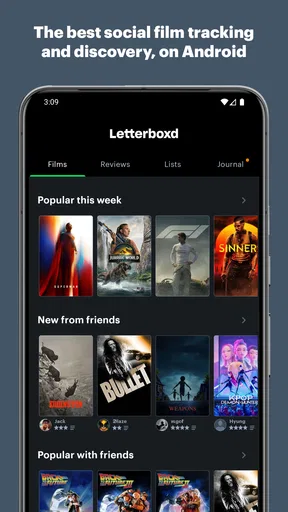
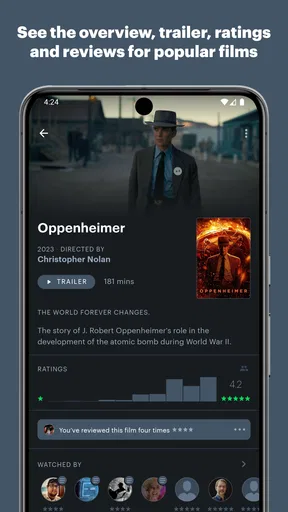
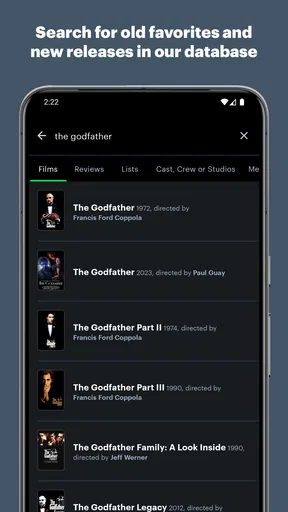
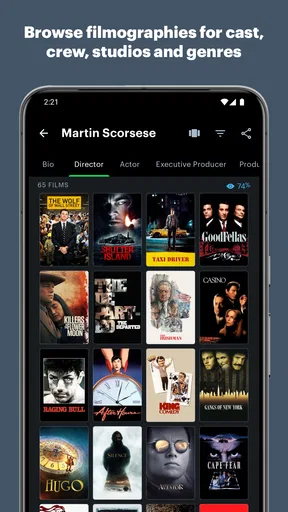
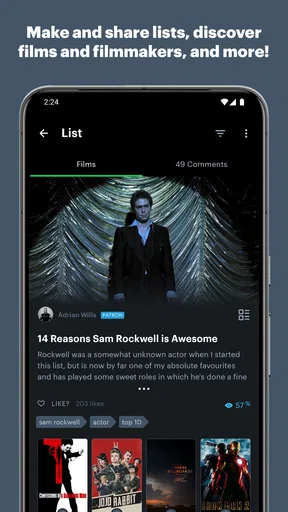
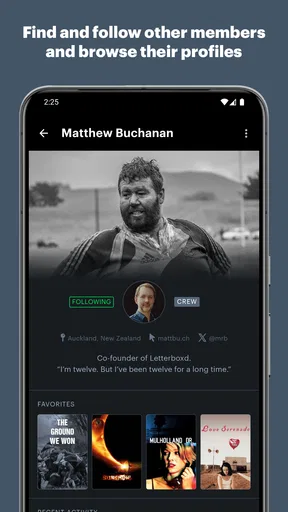
Our Review of Letterboxd
 Analysis by Appyee
I use Letterboxd when I want my relationship with films to feel less scattered. Instead of leaving recommendations in chat threads, half-remembered notes, or a streaming app’s temporary history, I can keep a personal record of what I watched and turn that record into something social. It is a film-focused social app from Letterboxd Limited, available free on Android and iOS, and its basic appeal is simple: watching a movie can become the beginning of a conversation rather than the end of one.
That sounds modest, but it changes the rhythm of choosing films. I am not only asking what is available tonight. I am also seeing what friends have watched, what they thought, and which titles keep appearing in my own history. The result feels more deliberate than endlessly scrolling through recommendations. At the same time, the social layer can add noise, and the app is not equally useful for someone who wants a private watchlist or a purely algorithmic service.
How Letterboxd fits into everyday film conversations
I find that Letterboxd works best when it gives film talk a place to continue beyond the moment a recommendation is made. In this section, I look at how a saved title can keep a casual suggestion from getting lost, while still leaving room to decide whether it suits a particular evening. That everyday rhythm leads naturally to a closer look at how recommendations become useful in practice.
A better place for recommendations than a busy chat thread
The communication problem Letterboxd solves is familiar. A friend says, “You should watch this,” and the title disappears under work messages, family updates, and links shared later that day. With a film-centered profile, the recommendation has somewhere to live. I can look up a title, save it for later, and return to it when I actually have time to watch. That small separation between hearing about a film and watching it makes recommendations more useful.
I also like that a film can carry more context than a bare title. A friend’s short reaction may tell me whether the film is slow, funny, unsettling, sentimental, or simply not worth the evening. That is different from a generic score because it gives me a sense of the person behind the opinion. For me, the strongest use is not discovering whatever is currently popular; it is learning the taste of people whose judgment I already trust.
The app belongs to the social category, but it does not feel like a general-purpose network with films added as an afterthought. The entire experience is organized around cinema. That focus improves clarity: I open it with a particular question, such as what to watch, what someone thought of a film, or what I have already seen. I am less likely to drift into unrelated content than I am on a broad social platform.
Turning a viewing habit into a useful personal record
Logging a film after watching it gives my memory a structure. I can revisit the titles that shaped a month, compare my reactions over time, and notice patterns in what I choose. That is more valuable than it first appears. When someone asks what I have enjoyed recently, I do not have to reconstruct the answer from memory. My own history becomes a conversation aid.
There is also a practical benefit when several people are planning a movie night. I can check whether I have already seen a suggestion, look through titles connected to a director or performer, and use friends’ activity as a starting point. The app does not remove the need to agree on a film, but it shortens the awkward stage where everyone says, “I do not know, what do you want to watch?”
My preferred workflow is to save a recommendation immediately, avoid writing a rushed opinion, and return after the film has had time to settle. That keeps the record more honest. A quick reaction can be fun, but a delayed note often explains better why a movie worked or failed for me. This is one of the less obvious strengths of using a film diary as a communication tool: it gives me room to think before turning a feeling into a public statement.
Conversation flows through taste, not just scores
Letterboxd works best when I treat it as a way to exchange taste rather than as a competition for the highest rating. A star score gives a quick signal, but a short personal note can reveal much more. Two people may give the same film a similar score for completely different reasons, while a lower rating may still come from someone whose recommendations I usually value.
That makes following the right people more important than following as many people as possible. A crowded activity feed can become a stream of disconnected opinions. A smaller circle gives me a clearer sense of what is worth investigating. I would rather see a few thoughtful reactions from people with compatible tastes than constantly process a large volume of reviews that I will never remember.
There is a useful distinction between discovering a film through someone and deciding whether it suits me. A friend’s reaction is a clue, not a guarantee. I still consider my mood, available time, and tolerance for difficult subject matter. This is where the app’s social design is helpful but limited: it improves the conversation around a choice, while the final choice remains personal.
For a realistic evening example, imagine that I have forty minutes before I need to sleep and a friend has recommended a long, demanding drama. The recommendation may be excellent, but it is wrong for that moment. I can save it instead of forcing the decision, then choose something shorter from my own list or from a friend whose taste matches my current mood. The app supports that pause, which is healthier than treating every recommendation as an immediate obligation.
Attention is still the hidden cost
The same feed that makes film talk lively can also create another form of scrolling. I may open the app to record one movie and end up browsing reactions, lists, profiles, and titles I did not intend to consider. Because the subject is enjoyable, the distraction feels productive even when I am only postponing a decision. Letterboxd is more focused than a general social network, but focused distraction is still distraction.
I manage this by entering with a specific purpose. If I am choosing a film, I look at my saved titles first. If I am recording one I watched, I log it and leave before browsing. If I want discovery, I give myself a defined session rather than opening the app whenever I feel bored. That boundary keeps the service from turning movie interest into another endless attention loop.
The app’s value also depends on how much energy I want to spend interpreting opinions. A stream of reviews can make a simple movie night feel like research. Sometimes I want that depth; sometimes I just want to press play. When the latter is true, a streaming service with a direct “watch now” path may be more convenient. Letterboxd helps me decide, but it is not a replacement for every part of the viewing process.
I would not judge the app only by its average rating of 3.3 from around 34 thousand ratings. A social product can feel excellent to someone who wants film discussion and frustrating to someone who expects a frictionless catalog or a perfectly personalized recommendation engine. The rating gives context, but my experience suggests that the fit between the app and the user’s communication habits matters more than the number alone.
Setting boundaries around public film opinions
Publicly recording a reaction can make me more thoughtful, but it can also make casual viewing feel performative. I sometimes catch myself looking for the clever sentence instead of simply noticing what I experienced. That is a real trade-off. The social audience can encourage better writing, yet it can also turn a private response into something I feel I need to defend.
My solution is to separate logging from reviewing. I can keep a personal record without immediately producing a polished opinion. When I do write, I try to describe my response rather than announce an objective verdict. “The pacing lost me” is clearer and more useful than pretending that my taste settles the question for everyone. This approach keeps conversation open and reduces the pressure to sound definitive.
Spoilers require similar care. A detailed reaction may be valuable after someone has watched the film, but harmful before that point. I avoid putting major plot information into the first line of a comment and think about whether the person reading it has likely seen the title. The app encourages film discussion, so basic spoiler awareness is not a minor courtesy; it is part of using the social space well.
There is another boundary worth considering: the difference between following a person and adopting their taste. I have found that a trusted reviewer can become an informal filter for my watchlist, but I still need to keep some independence. If I only choose films that receive approval from people I follow, discovery becomes narrow. I get better results when I use other users as guides while leaving room for unexpected choices.
Free access, optional spending, and platform fit
The app is free to download and use, which makes it easy to try without committing money first. Optional in-app purchases range from $0.99 to $48.99 per item, so I would review the purchase screen carefully before paying for anything. For a casual user, the free experience may be enough to decide whether the social diary suits them. I would not pay simply because I enjoy films; I would pay only if the additional experience clearly improves the way I organize or explore them.
Letterboxd is rated Teen, a sensible reminder that film discussion can include mature themes even when the app itself is easy to navigate. Parents should think about the kinds of movies and conversations a young user may encounter, not just the age label. The service is designed for people who want to discuss cinema openly, and that means the surrounding community is part of the experience.
On the technical side, the current version is 3.5.6 and it requires at least iOS or Android 9. The app has been available since August 29, 2017, and its reach is substantial, with over ten million installs. That broad adoption makes it easier to find an active film conversation, although popularity does not guarantee that every friend I want to follow is using it.
Where it beats familiar alternatives—and where it does not
Compared with a general social network, Letterboxd gives film conversations a home with less unrelated clutter. Compared with a streaming service, it offers richer personal context but does not replace the service I use to play the movie. Compared with a private notes app, it adds discovery and interaction, but it also introduces an audience and the possibility of distraction.
Those differences matter in practice. If I mainly need to remember titles, a simple notes tool may be faster. If I want an automatic list based on viewing behavior, a streaming platform may feel more effortless. If I want to discuss cinematography, compare reactions, and follow people whose film taste I understand, Letterboxd is the stronger choice. It occupies a specific middle ground between diary, recommendation tool, and social network.
One trade-off is that social discovery can make my watchlist grow faster than I can manage it. Saving every interesting recommendation feels productive, but an oversized list becomes another source of indecision. I now treat saved films as a shortlist rather than a permanent archive, removing titles that no longer fit my interests. That simple habit keeps the app from turning curiosity into clutter.
Who will get the most from it?
I recommend it to people who watch films regularly and want their choices to become part of an ongoing conversation. It is especially useful for friends who exchange recommendations often, couples planning shared viewing, students exploring cinema, and anyone who enjoys remembering not only what they watched but how it felt at the time.
It is less suitable for someone who dislikes public discussion, wants no social pressure around entertainment, or expects an app to tell them exactly what to watch without browsing. It may also frustrate users who want one place that combines detailed film discovery with direct playback. In those cases, a private tracker or a streaming app may be the better everyday companion.
My strongest advice is to begin with a small, intentional circle. Follow people whose comments help you make decisions, save recommendations instead of treating them as commitments, and write only when you have something specific to add. That approach preserves attention and makes the app feel like a useful conversation space rather than another feed demanding constant reactions.
My verdict after using it as a film diary
Letterboxd changes the pace of film communication in a good way when I use it deliberately. It gives recommendations a place to wait, opinions a little more context, and viewing history a social meaning. I appreciate that it can turn “What should I watch?” into a conversation about taste, mood, and memory instead of a random search through a catalog.
It is not perfect. The feed can consume more attention than intended, public reactions can make casual viewing feel overly serious, and the service does not replace a streaming platform when I simply want to watch something immediately. The optional purchases also mean I would check which extras matter to me before spending money.
Still, I keep coming back because the app respects something ordinary social networks often lose: a conversation can be slow. I can hear about a film today, save it, watch it next week, and respond when I have a real opinion. For me, that makes the experience more thoughtful and less disposable. With over ten million installs, it is clearly not a tiny niche tool, but its real value remains personal: it is best when it helps a small group of people communicate more clearly about the films they actually care about.
Privacy and Permissions
See what permissions an app requests and how it handles your data.
- Photos/Media/Files
- read the contents of your USB storage, modify or delete the contents of your USB storage
- Storage
- read the contents of your USB storage, modify or delete the contents of your USB storage
- Camera
- take pictures and videos
- Wi-Fi connection information
- view Wi-Fi connections
- Other
- view network connections, full network access, prevent device from sleeping
Verdict
Strengths of Letterboxd
- Detailed film pages with cast, crew, ratings, reviews, and release information.
- Personal watchlists make it easy to save films for future viewing.
- Diary entries help track viewing dates and build a personal film history.
- Lists and tags offer useful ways to organize films by theme or interest.
- Active film community provides varied opinions beyond professional reviews.
Limitations of Letterboxd
- Many advanced features require a paid Pro or Patron subscription.
- The large film database can contain duplicate or incomplete entries.
- Community ratings may be influenced by hype, fandom, or review bombing.
- Some social features feel limited compared with dedicated messaging platforms.
- Streaming availability links can vary by country and may not always be accurate.
Similar Picks in This Category
View All
Meta Platforms, Inc.4.6

Instagram4.0

Likee-Live, Chat & Party Games
Likeme Pte. Ltd.4.4

Facebook Lite
Meta Platforms, Inc.4.5

TikTok - Videos, Shop & LIVE
TikTok Pte. Ltd.4.0

Moj: Free Short Drama & Reels
ShareChat4.1
Frequently Asked Questions
What is Letterboxd used for?
Letterboxd is a social platform for discovering, rating, reviewing, and discussing films. After creating a profile, you can keep a diary of movies you watch, assign star ratings, write reviews, create themed lists, and follow friends or film critics. It is useful for casual viewers and dedicated movie fans who want to organize their viewing history and find recommendations based on their tastes.
Is Letterboxd free to download and use?
Yes, Letterboxd offers a free version for Android, iPhone, and web browsers. The basic experience includes searching for films, maintaining a watchlist, logging watches, rating movies, writing reviews, and interacting with the community. Optional paid memberships, such as Pro and Patron plans, add extra features and customization. The exact benefits and prices may vary by platform and region.
Do I need an account to use Letterboxd?
You can browse some film information and public reviews without registering, but an account is required for the main social and tracking features. Signing up allows you to create a personal profile, save films to your watchlist, log viewing dates, rate movies, publish reviews, follow other members, and receive personalized activity. An account also keeps your data synchronized across supported devices.
Can I watch movies directly through Letterboxd?
Letterboxd is primarily a film discovery, tracking, and social-review application, not a general streaming service. It normally does not provide full movies for direct viewing. Instead, film pages may show availability information or links to streaming and rental services, depending on your country. Before choosing a movie, check the listed providers because availability, pricing, subtitles, and playback options can change frequently.
Is Letterboxd suitable for children and families?
Letterboxd contains a broad range of film content, including mature titles, strong language, violence, sexual themes, and user-written reviews that may not be appropriate for children. The app is best used by teenagers and adults with suitable supervision for younger users. Parents should also remember that Letterboxd is a social platform, so public profiles, comments, and community interactions may require additional guidance.
